
Planning Your Treatment
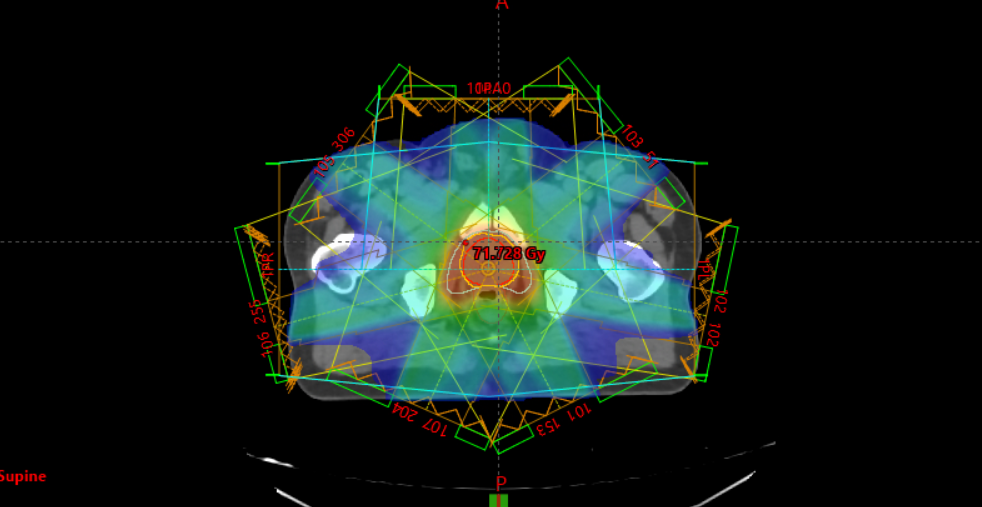
The planning process for radiation therapy is complex. It involves producing optimum dose distribution that will destroy the tumour, while sparing as much healthy tissue as possible.
The planning process is a combined effort between the oncologist, radiographers, physicist as it requires clinical knowledge and technical expertise to achieve the best possible outcome for the patient.
Types Of Radiotherapy
-
External beam radiation
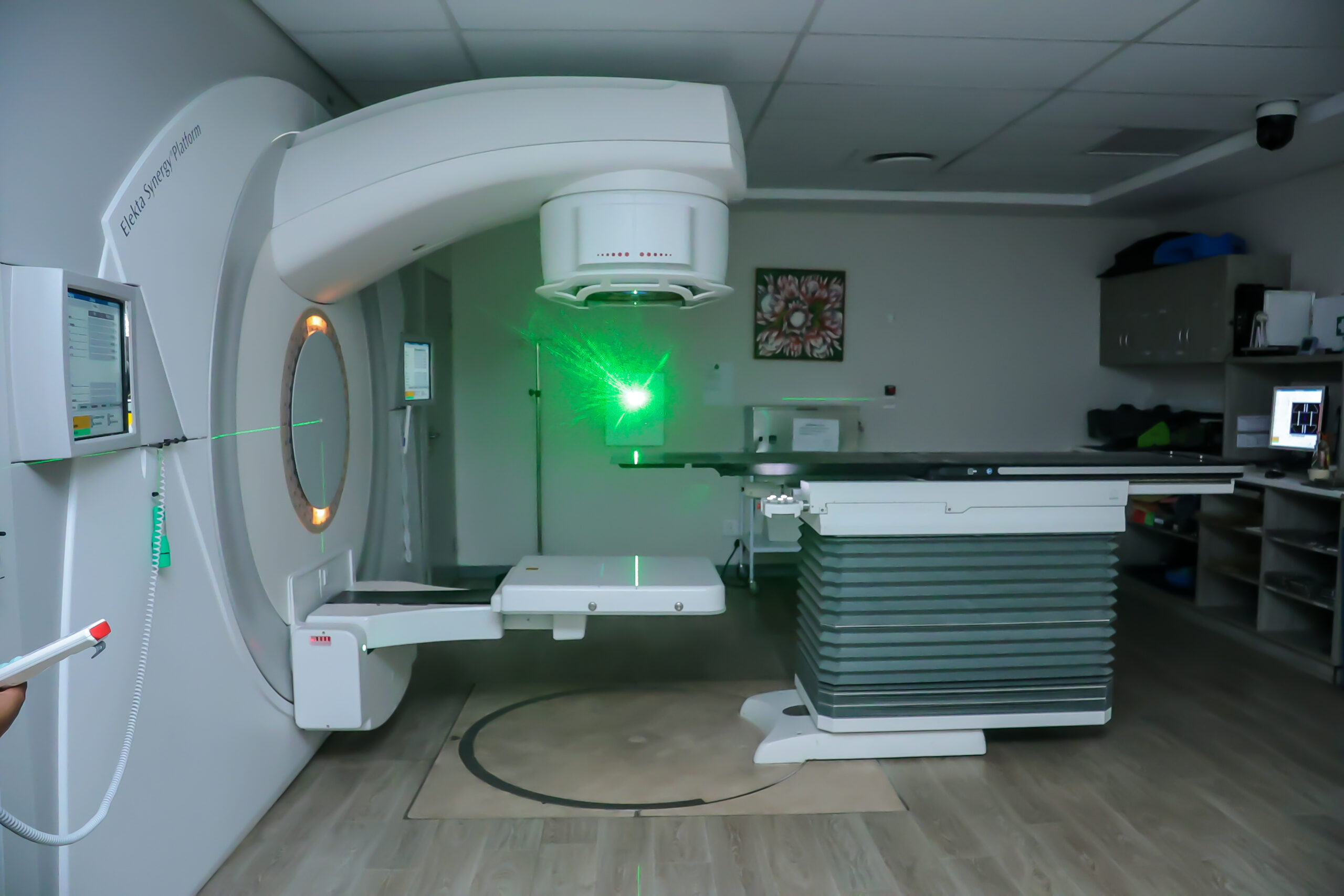
External beam radiation is the most common source type of radiation treatment.
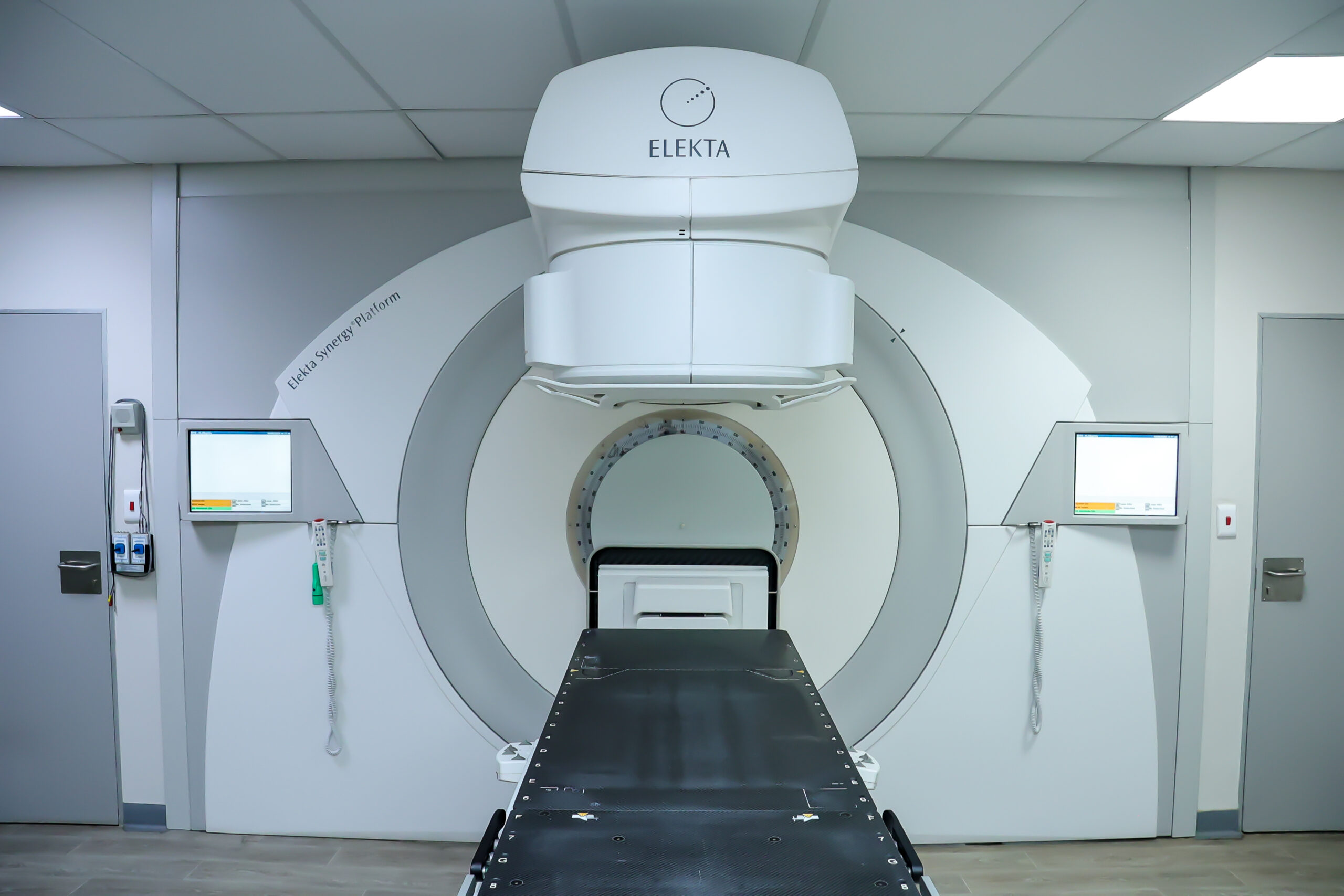
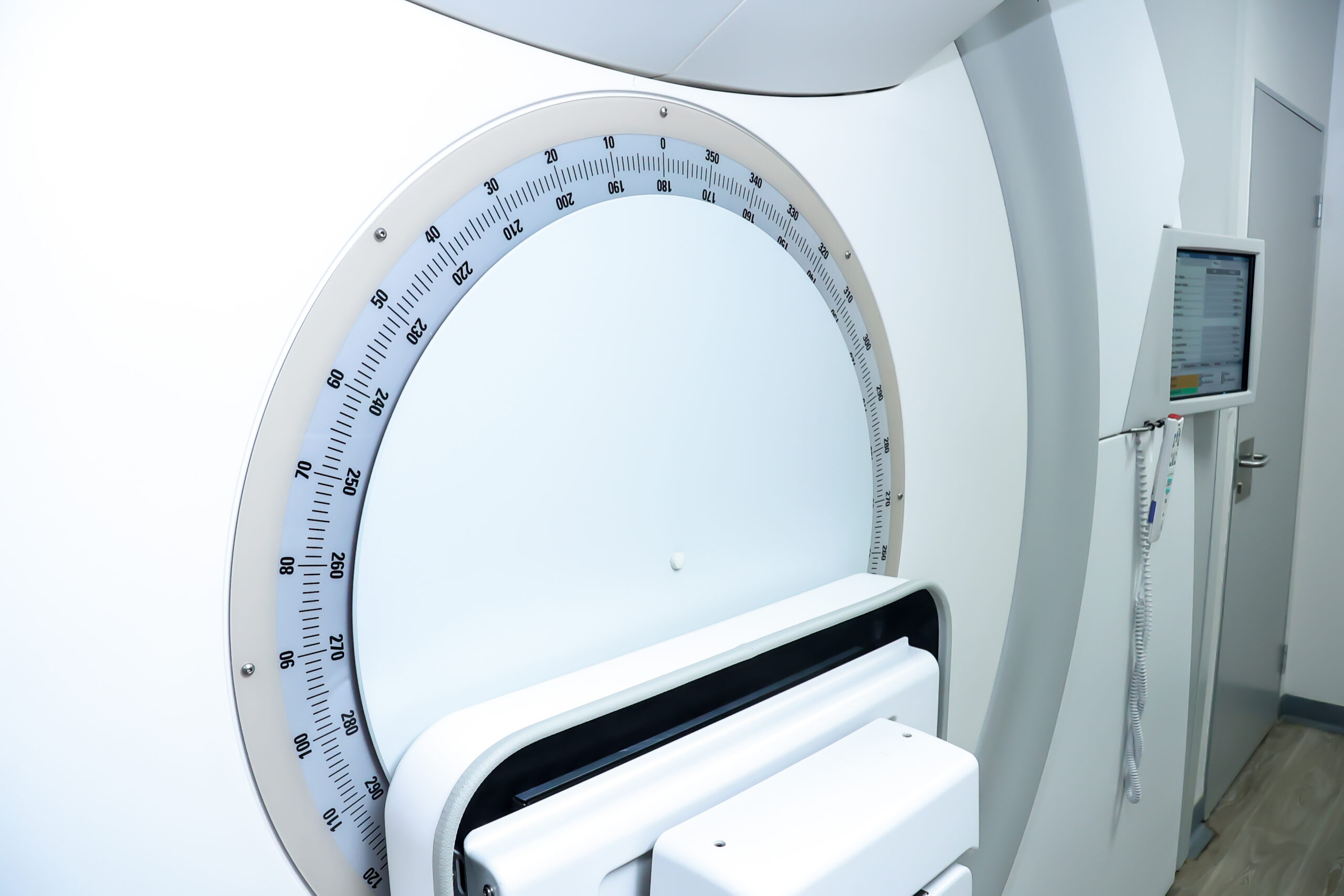
Radiation beams are aimed from a linear accelerator, which penetrate the body to reach the cancer site. -
Internal radiation therapy
The second main type of radiation treatment is internal radiation therapy, also known as brachytherapy. During this treatment, a doctor places an implant containing radiation in or near the cancer site.
-
Systemic radiation therapy
Systemic radiation therapy is also administered internally and requires a person to swallow a radioactive substance, which travels throughout the body to find and kill the cancerous cells.
What Happens During Each Treatment Visit?
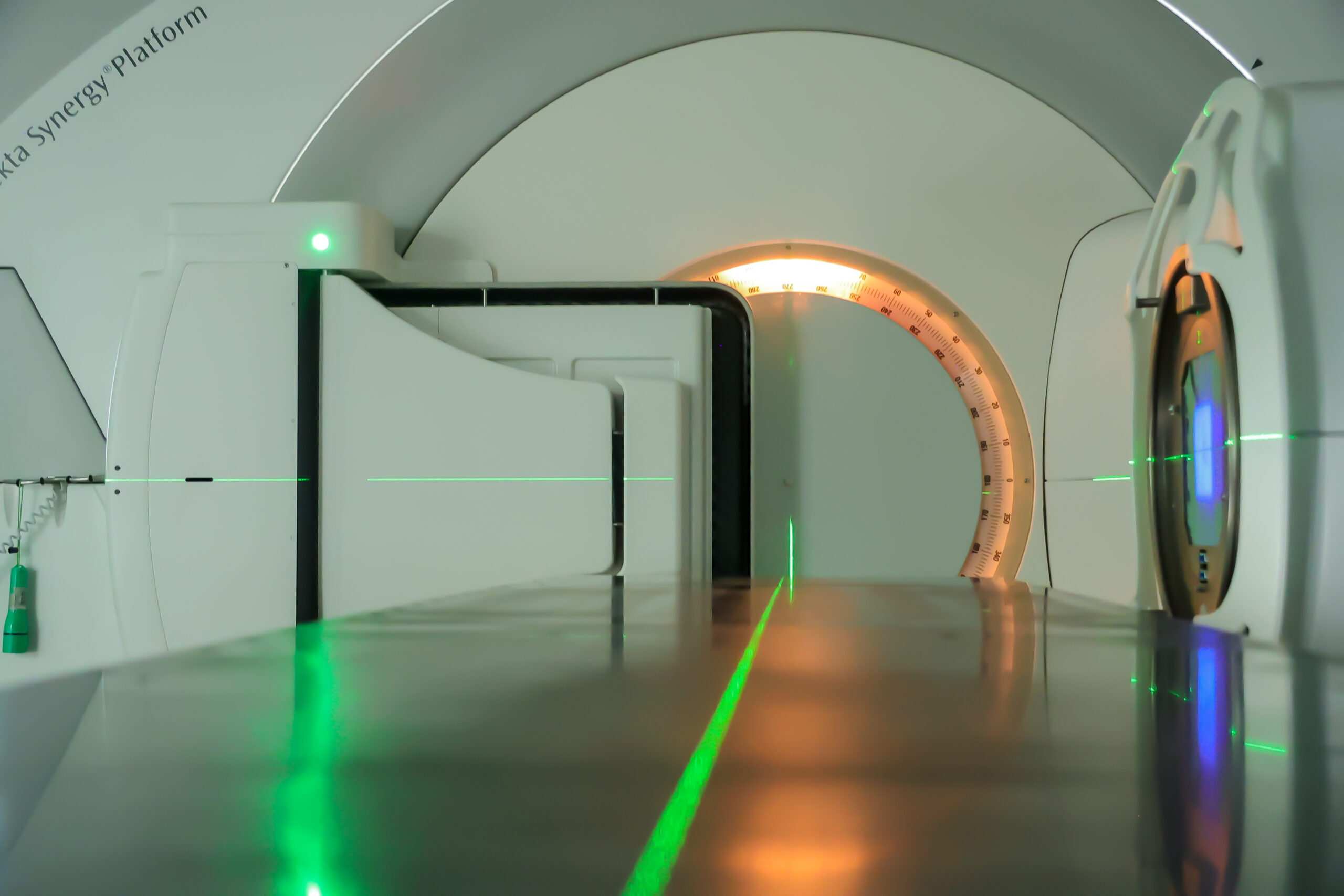
The first step in radiation therapy is a consultation with Dr Smalberger, during which he will explain the process.
The next step is a CT simulation to produce a scan from which the radiation team will plan the angles and shapes of radiation beams. Imaging scans will be taken to assist Dr Smalberger in pinpointing the exact treatment area to target during radiation. Once the CT simulation is done, it will take a few days to plan the treatment.
During each session, you will be in the radiation room alone. The process is not necessarily painful but could be uncomfortable. Treatment time varies and is dependent on the area being radiated and the type of cancer, but usually takes between 10 and 40 minutes.
Patients receive radiation Monday to Friday for five to six weeks, but normally get breaks on weekends to allow normal cells to recover.
Will I Be Radioactive During Or After External Radiation Treatment?
External beam radiation and brachytherapy does not make you radioactive.
For certain selective tumours systemic radiation will be prescribed, which involves swallowing a pill.
In these cases, a patient will be admitted to hospital and kept in isolation for 3 to 5 days. Once the prescribed period is over, the patient will be discharged and will not pose any risk.
What Are The Side Effects Of Radiation Treatment?
(Info obtained from the American Cancer Society)
-
Early side effects
Happen during or shortly after treatment. These side effects tend to be short-term, mild, and treatable. They’re usually gone within a few weeks after treatment ends. The most common early side effects are fatigue (feeling tired) and skin changes. Other early side effects usually are related to the area being treated, such as hair loss and mouth problems when radiation treatment is given to this area.
-
Late side effects
Can take months or even years to develop. They can occur in any normal tissue in the body that has received radiation. The risk of late side effects depends on the area treated as well as the radiation dose that was used. Careful treatment planning can help avoid serious long-term side effects. It’s always best to talk to your radiation oncologist about the risk of long-term side effects.
Contact Us
To book an appointment at Smalberger Oncology, you will need to be referred by a medical practitioner or specialist.
Practice hours:
Monday to Thursday – 07:30 to 16:00
Friday – 07:30 to 13:00
In case of an emergency after hours or over weekends, please visit your closest hospital emergency room.
Address:
Lenmed Royal Hospital and Heart Centre Room G09
Welgevonden Road
Royldene
Kimberley